General

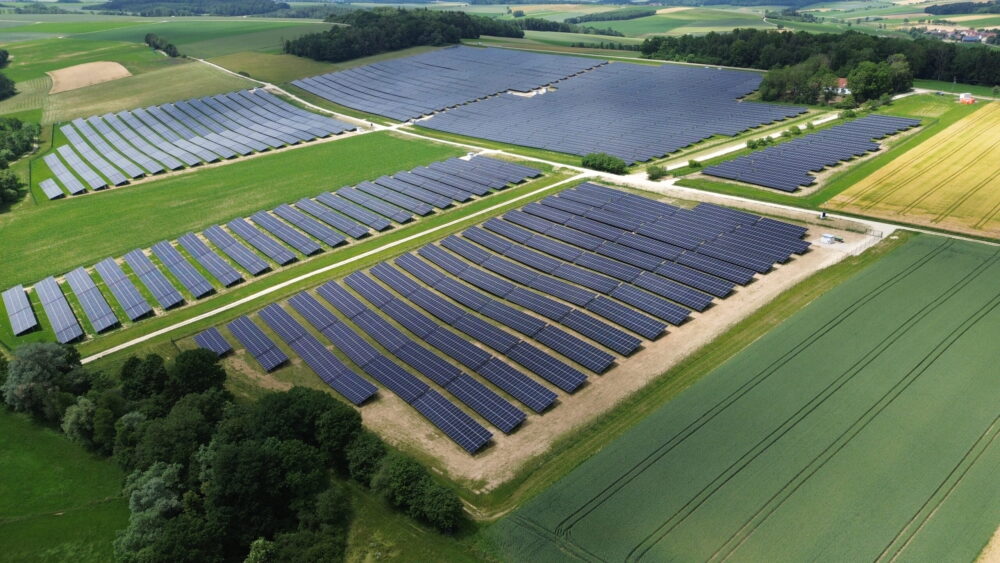
The Daiting Solar Park, recently completed by Aton Projects for LEW Natur, is set to play a role in the next phase of smart renewable energy management. LEW plans to implement AI-powered forecasting technology at the site to improve short-term predictions of solar power generation.
With an installed capacity of 23.8 MWp and approximately 38,500 photovoltaic modules, Daiting is the largest solar park in LEW’s portfolio. Aton Projects was responsible for the engineering, procurement, and construction of the utility-scale PV installation.
Solar power generation can change rapidly when clouds pass over a solar farm. Conventional weather models generally cover large geographic areas and may therefore be less accurate when predicting the output of a single specific facility.
The technology developed by Nuno Labs combines locally installed cameras and sensors with artificial intelligence. The system analyzes the movement and density of clouds directly above a solar park and combines these observations with local measurement data. This enables highly localized, short-term forecasts of expected solar production, with a forecast horizon of up to 120 minutes.
The solution has already been tested at LEW solar parks in Meitingen and Friedberg and is now scheduled for further deployment, including at the recently commissioned Daiting solar park.
More accurate generation forecasts can help reduce the gap between forecast and actual electricity production. This can lower balancing costs, support the efficient marketing of renewable electricity through power purchase agreements, and create additional opportunities for solar parks to contribute to grid stability.
The partnership between LEW and Nuno Labs was honored with the 2026 Bavarian Energy Award in the category “Digitalization in the Energy Sector.”
For Aton Projects, the planned rollout demonstrates how a successfully delivered utility-scale PV asset can provide the technical foundation for continued innovation. After construction and commissioning, digital technologies can further optimize the way renewable energy is forecasted, marketed, and integrated into the electricity grid.
This development reflects the shift from renewable energy generation alone toward a smarter, more flexible, and better-integrated energy infrastructure.
Read here the article published by *Zeitung für kommunale Wirtschaft*